
You drive into your driveway, put your car into “Park” position, turn off your engine, and exit. Do these steps ring a bell? Many drivers ignore the parking brake function. Some drivers press the lever merely as a habit, while others do it only when they are required to stop their car on a high slope.
However, have you ever wondered what is going on inside your vehicle when you activate this braking mechanism?
The parking brake is a safety device installed in your car. Its role is to secure your vehicle in place and provide you with a way to stop your car if your regular brakes become stop working. This article is all about the mechanics behind this system, the reasons why using it daily is essential, and how you can identify that it is time to visit a mechanic.
1. What Exactly Is a Parking Brake?
Before reviewing the workings of the parking brake, it is necessary to examine how the braking system in your vehicle operates.
By pushing down on the brake pedal when you drive your car, you engage a hydraulic brake system that works by forcing liquid through tubing to apply pressure against the pads which in turn grip down tightly onto the metal rotors that rotate along with the wheels of your car. Since the entire process involves building pressure liquid, failure may occur as a result of liquid leakage within the hydraulic lines.
Automotive engineers had to find an alternative.
That is how the parking brake came about.
The parking brake functions by own and separately from the regular foot brake. Unlike the latter that depends heavily on the fluid in the hydraulic system, the former uses a mechanical link to ignore the lines. Additionally, while your foot brake stops all four wheels, your parking brake typically acts on only the rear wheels of your vehicle. This provides an added security measure as it means that even if a leak causes your brakes to fail, the parking brake will be able to slow you down physically.
2. How the Manual Parking Brake Works
For a long time, the mechanical parking brake was common among all vehicles. This brake can either be activated using the lever that appears on the center console of your car or the foot pedal on the left side, where other pedal brakes are not found.
The following are the processes involved when operating the manual parking brake:
Steel Cable
When you activate the lever upwards or depress the foot pedal, you create tension in a thick, braided steel cable located beneath the vehicle’s floor. After creating tension, the cable travels throughout the middle section of the vehicle until it reaches the end referred to as an equalizer yoke.
Connector Link
After reaching the connector link from the steel cable, the connector link distributes the tension created through the steel cable evenly to two separate cables. One cable goes towards the left rear wheel, and the other to the right rear wheel.
Wheel Griping
When the two cables on the rear end are pulled taut, the braking mechanism is activated for the two rear wheels.
- For vehicles that have rear drum brakes: The cable will pull the small lever located within the brake drum. The lever then presses the brake shoes against the inside walls of the rotating drum.
- For vehicles that have rear disc brakes: The cable will cause either a twisting effect on the mechanical screw or will pull the lever connected to the brake caliper, resulting in the brake pads being pressed against the rotor.
3. How the Electronic Parking Brake Works
With the development of new technologies for cars, the handbrake lever mechanism will soon be extinct. The Electronic Parking Brake (EPB) works through the operation of pressing or pulling a single button located on the dashboard or center console.
Though the outcome is identical—releasing the rear wheels—the method differs. No bulky metallic cable exists beneath the vehicle. The only things needed are electrical currents and minuscule motors.
The process involved in operating the electronic braking system is as follows:
The Control Module
If you push the parking brake button, an electrical signal is sent from your vehicle’s computer control system to a specially designed computer within your vehicle called the brake control module.
The Electric Motors
In response to the electrical signal, electricity is immediately supplied to small motors, which are attached to the rear brake calipers.
Engaging the Calipers
These small electric motors will engage a series of gears that press the brake pads firmly against the rotor. Since an electric motor is doing the pressing, your vehicle always uses the right amount of pressure to keep it locked in place.
To unlock the brake calipers, all you have to do is press the parking brake button once more (or, in some vehicles, simply push the gas pedal).
4. The Hidden Danger: Why You Must Use It Every Time You Park
Many car owners subscribe to a misunderstanding whereby they believe that use of parking brake is necessary only when parking their cars on extremely sharp surface. They assume that engaging the automatic transmission in “Park” is sufficient for keeping the car in place.
The truth is that such practice can result in huge repair costs for you.
By engaging an automatic transmission in “Park” mode, what you are actually doing is relying upon the strength of a miniscule part of your car known as the parking pawl. The parking stopper is a small metallic pin, approximately the size of your index finger, which falls into a groove within the transmission gear ring. The pin is the only mechanism preventing movement of your heavy vehicle, weighing about two tons.
In case you park the car on an incline without the emergency brake, the weight of the whole car falls upon that little pin. Under normal circumstances, excessive strain exerted by the car’s weight wears out the pin. In addition, should the vehicle be hit by another car, chances are high that the pin will break. Once broken, the pin will not prevent the car from rolling away, damaging your transmission gear system.
When you always use the parking brake when you park, you transfer the load from your vehicle’s transmission, which is quite delicate, to its rear brakes, which are very strong.
5. What Happens if You Forget to Release Your Parking Brake?
All of us have been there before. We fire up our engine, shift gears, and step on the gas, thinking we’ve got things under control. Instead, we discover we are nowhere and that this happens because we forgot to release our emergency brake.
If we notice the problem early enough, we won’t face any problems with our vehicle. If we decide to ignore it, though, our car will suffer greatly.
Greatly Increased Heat Generation
The braking process results in great generation of heat through constant friction between brake pads and moving rotors. Thus, it’s highly likely that within minutes of driving with parking brakes still engaged, the hub bearings will become overheated.
Brake Pads Overheated
Excessive heating of the material brake pads are made of causes them to melt into a hard substance. The process is called overheating. The effect of such an issue is that brake pads cannot work properly, failing to grasp the metal rotor.
Brake liquid Boiling
The heat that gets transferred into the brake calipers could actually cause the brake liquid to boil. The boiling of brake fluid causes it to turn into vapor. You would be unable to apply brakes because the pedal would suddenly become soft.
6. How Weather Affects Your Emergency Brake
Since the parking brake resides beneath your vehicle, it is always subjected to the elements in terms of moisture, dirt, mud, and extreme variations in temperature. As such, weather becomes an important factor in its effective operation.
Freezing in Winter
In case the rubber covering on your steel cable brake becomes cracked, water will find its way inside. When temperatures freeze at night during winter, ice is bound to form from this water. In the morning, when you attempt to disengage the parking brake, you will find that the steel cable is now frozen in position. While the lever may move, the brakes themselves remain locked up tight to the wheels.
Corrosion Due To Rusting
Living by the seaside or where there are rains means rusting will take place. The equalizer yoke along with the springs controlling your cables could get rusty. This leads to either difficulty moving the lever as a result of stiffness or cable breaking from stress.
7. Common Warning Signs Your Parking Brake Needs Attention
Similarly, like other parts of your vehicle, the parking brake is subjected to wear and tear. Steel cables become extended, rubber seals decline, and springs get compressed. Here are some signs that you should be aware of:
- Your Vehicle Moves: The easiest indication is when you apply the brake lever, and the automobile continues moving forward or backward while on an incline. In this situation, your steel cable is either extended and requires prompt attention from a professional auto technician.
- The Handbrake Lever Stretches Too High: Initially, when you got your vehicle, you might have noticed that the lever required only three to four clicks before locking the tires. If it now stretches until it touches the roof without giving you any resistance, the steel cable is highly stretched.
- Softness of Your Foot Pedal: In case your vehicle has a foot pedal, it should offer a considerable amount of resistance when you apply it. When it sinks into the ground without resistance, it means that the cable is broken.
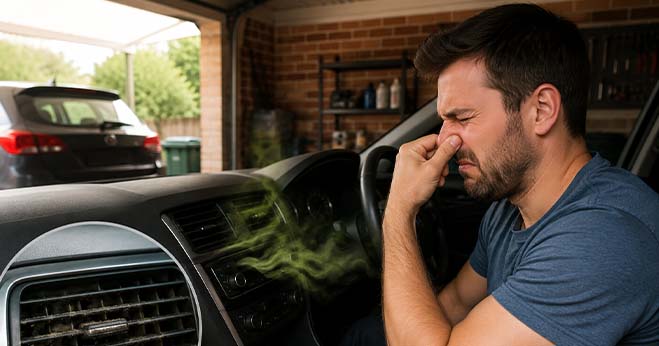
- Burning Odor: When you release the lever, if your car seems too heavy, moves sluggishly, or produces an odor of burning, there is likely some rusting of the mechanical part. Your brake pads remain clamped against the wheel despite the lever being released.
- Dashboard Warnings: When your dashboard light continues to glow even after releasing the lever or pressing the electronic brake pedal, then there is something wrong with the sensors of your system.
Note: If your vehicle drags to the left while braking or makes a loud thudding sound when driving over rough ground, this does not mean that your brakes need replacement. This is a common symptom of worn out parts under your vehicle. You should get your suspension and steering system checked in Glendenning or in Bidwill for a better assessment of the issue.
8. How to Maintain Your Parking Brake System
One of the best things about maintaining your parking brake in excellent working condition is that it requires minimal effort. There is one golden rule to follow, however: Use it or lose it.
The majority of drivers believe that using the emergency brake only when necessary will prevent wear on the mechanism. Unfortunately, this is far from the case; if you neglect to operate the cables, they will eventually be dirty and moisture, causing them to rust due to rest. Operating the lever on a daily basis make sure that the cables remain free to move and that no rust can develop.
Moreover, it is always advisable to ask the mechanic to check the brake cables as part of their routine general automotive service checks. In a matter of minutes, they will crawl beneath the vehicle and clean the joints, lubricate the equalizer yoke, and adjust the tension.
Book a Brake Inspection at Patel Auto Service
Your car’s brakes are hands down the most vital safety system in your car. Together with the brakes, having your safety and tyres checked regularly is the most effective method to make sure that your vehicle will have full traction on the road at all times when driving. It is always better to be safe than sorry, especially when dealing with safety issues.
If you find your parking brake to be loose, your vehicle moving slightly when it is parked, or you have been hearing any strange squeaking or grinding sounds from your wheels, it’s high time that you take your vehicle to be inspected by professionals.
If you are searching for professional auto repairs in Marsden Park, you have come to the right place. At Patel Auto Service, our skilled mechanics can provide you with quality brake repair services.
Our mechanics will check the condition of your brake cables, your brake pads, your electronic motors, and make sure that your vehicle is in perfect condition.
If you have noticed your car pulling to one side or bouncing over speed bumps, our team can also inspect your suspension and steering to keep your daily drive smooth and safe.
Don’t let your vehicle roll down the hill or fail on the highway. Make sure your vehicle is safe and secure.
Book a Brake Inspection online today or call our Marsden Park workshop to secure your spot!
FAQs
- Is it possible for me to come to a halt using the parking brake if my foot brakes do not function while I am driving?
The answer to that question is yes, but only as long as it is done extremely cautiously. If you have problems with your foot brakes, ease off the gas pedal slowly. You should start applying the parking brake very gradually in order to bring the vehicle to a gradual stop without any risks. Be very careful not to pull the lever suddenly because this may lock the rear wheels causing the car to lose its grip and skid. - Why does my electronic parking brake activate automatically every time I use the “Park” setting?
The answer lies in the fact that all new models of vehicles have this function activated automatically every time you shift gears into park and switch off your engine.
- Is it possible for us to stop the car with manual transmission without pressing the brake pedals?
No. Despite the fact that shifting the gear into first or reverse position may produce more friction, it would not be the ideal choice compared to using the hand brake mechanism. This is because if the vehicle moves a little distance, the engine would start rotating, making the wheels move. Hence, it is better to place the vehicle in the right gear and apply the hand brake.
- What would be the price for fixing a parking brake cable?
The price of fixing the metal brake cable will depend on the brand of the automobile. However, it would be fairly cheap because this is not a complicated job, and there would be no need for any specialized equipment. If you were the type of driver who kept the brakes engaged for extended periods of time, wearing out the brake pads and rotors, it would be expensive.
- Should I ask my mechanic to examine my parking brake every time I visit him?
It is better to request your mechanic to assess your whole braking system, including parking cables and brake pads, once a year or after covering 15,000 kilometers.



Leave A Comment