
What Is Car Suspension and Why Does It Matter?
When you feel that your car is bouncing, making strange noises, the tires are not wearing evenly, pulling, nose-diving on braking, or experiencing excessive bouncing, or the steering is loose, then your car has worn parts that affect its handling and safety. These initial signs can be identified with the help of simple checks that can prevent larger problems and make the drives on the diverse Australian roads smooth.
How Does Car Suspension Work?
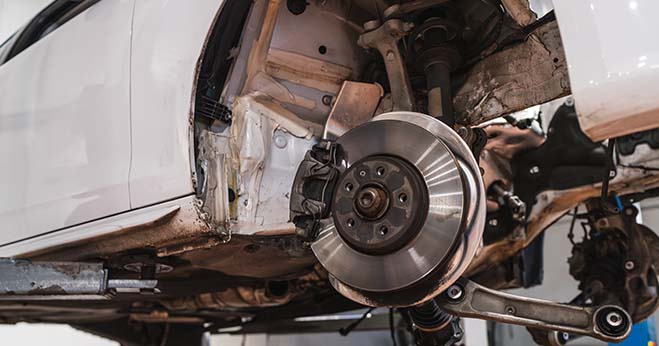
Car suspension is a system by which the wheels are attached to the body, through springs, to absorb any bumps and shocks to put the tire in constant and steady contact. This system guarantees that there is control in a turn or stop, which is crucial on a highway or a gravel road.
Hits such as potholes are compressed by springs, which hold energy temporarily. By shocks, it is emitted here and there to prevent motion indefinitely. Vibrations are suppressed by bushings, and alignment by arms. This is used in daily activities to provide comfort and grip- front struts tend to do steering in sedans popular in this area.
Wear interferes with this: the recent reports indicate that an increasing number of replacements are needed because of the stress on the road, and the Australian system is subjected to additional pressure because of heat and dust. The flow can be used to identify the balanced black spots.
Common Signs Your Car’s Suspension Needs Attention
These indications are added to the everyday drives, observing the changes in the feeling or hearing. Both indicate certain wear, which has been verified by the new mechanic manuals.
For the full list of everyday issues to watch for, see our Top 10 Most Common Car Problems to catch suspension faults early alongside other frequent concerns.
What Does a Rough or Bumpy Ride Indicate?
The shocks or struts do not cushion, so a rough ride over small bumps will leave all the road flaws jerking through. This is because of leaked fluid or broken seals that occur following frequent usage.
Feel it in street areas in cities with expansion joints, once smoothed, now banging. It makes it less comfortable and less grippy, particularly when it rains.
Why Do You Hear Strange Noises from the Suspension?
Clunks or squeaks over bumpy areas indicate lazy bushing or ball joints against padding. These are planted on gravel drives, which are common in the rural regions.
Rubber bushes wither away, and metal wears away on a curb cut. Noises imply uncontrolled interaction, which diffuses harm. This is one of the common pothole aftermaths that guides in 2025 point out.
What Causes Uneven Tire Wear?
Wobbly tread, bald edges or patches, is a result of tilted wheels because of a sagging spring or poor shocks. This scrapes rubber; it is life abridged.
Check-up: inside feathers? It is associated with imbalance due to wear and tear. It is seen by commuters after winter rain on broken roads. According to alignment pros, it increases the tire costs when not addressed.
Why Is Your Car Pulling to One Side?
When pulled left or right on flats, the height varies unevenly due to bad struts or springs. The wheels become misaligned and run towards the weak point.
The hands always do things right, but in the wind, it increases danger. Test the wheel by releasing it on a flat surface. This imbalance frequently occurs after curb hits, according to repair data of 2025.
What Is a Nose Dive During Braking?
Nose dip-the front is plunging but has stopped, meaning that front shocks do not stop weight movement. It prolongs pauses and throws weight on.
Hood falls into a traffic jam; feel it merging. Dampers that are worn allow momentum to overcome, and will put the other parts to the test. This is an assurance of safety by braking tests.
Why Does Your Car Bounce Excessively After Bumps?
The float results when excess bounces after a dip settle slowly. It hangs in seconds, cutting the corner hold.
Strauss, a fender, one bounce is all, more trouble. Dangerous roads, such as coastal roads. Bounce takes first place in hot climates with its worn systems.
What Makes Steering Feel Loose or Wobbly?
Loose steering, shakes, or slackening of the tie rods or bushings, up to worn tie rods or bushings, or slackening of the link. Vibrations buzz at speed.
Turns cringe, attention is divided off the road. Loaded drives worsen it. This undermines the response, which is an important issue in high-mileage utes.
How to Perform DIY Checks on Your Suspension
DIY begins with safe and level positions, no equipment required to make the basics, but validated on flat ground.
Get each end to the hard; bang it once and lay out, one bang more and it will have gone. Check under the scan for oil streaks on struts or split bushings. Check the presence of ridges. Slow down over bumps, observe drifts or sounds. These indicate most problems per home on the spot.
What Causes Suspension Problems in Australian Conditions?
Potholes and chewed roads are the leading reasons, with bent arm or gravel seals on urban and backside routes. Fluid is baked by heat, dust clogs, and life is wasted by exposure.
Curb pull is caused by sagging noble springs, poor alignments, and bad curb fits. Slowness accelerates everything, but according to 2025 reports, many of the faults in handling can be attributed to this. Wear is increased by bad habits, such as hard hits.
When Should You Get a Professional Suspension Inspection?
Pro assistance is provided regarding sustained symptoms, such as drips or tears; lifts reveal concealed curves. At Patel Auto Service Centre, we raise, dig, test-drive, and draw conclusions.
Manufactures steering ties and alignments during the same session, which is also part of our automotive lineup. No need to drive long distances with clunks, dangers add up fast.
Why Does Suspension Maintenance Support Road Safety in Australia?
Maintenance ensures tires are gripped, reducing skids on slippery roads or loose surfaces, which are necessary at highway limits. Old-fashioned equipment increases the chances of hydroplaning during storms.
Pink slips are checking; failures drop. Even wearing spares saves the brakes and cuts expenses. Statistics indicate that good systems are averting numerous crashes in handling.
Maintenance Tips for Different Driving Styles
Be made to suit, fast on fronts, loads in rears.
Urban: Turn tires now and then; spray down salt after every three months. Highways: Annually, eye steering fluid. Off-road: After-flood scans; grease joints vs. grit. Ease over dips, skip overloads, and greater stretch parts.
Your Path to Safer Drives
These cues, from jolts to shakes, clarify how to know if your car’s suspension needs attention, ensuring safer Aussie miles. Act soon for steady control.
At Patel Auto Service Centre, we handle checks and fixes with clear steps. Reach out to us for your next.
FAQs
- What are the first signs your car’s suspension needs attention?
Rough rides, clunks/squeaks over bumps, uneven tyre wear, pulling to one side, or nose-diving when braking.
- Why does my car bounce excessively after bumps?
Worn shocks/struts fail to control spring rebound, more than one bounce means replacement time.
- How does Australian weather affect suspension?
Heat bakes shock fluid, dust clogs bushings, and potholes bend components, shortening life by up to 30%.
- When should I get a professional suspension check?
If you notice 2+ signs (noises, pulling, leaks) or after hitting a big pothole, don’t wait for pink slip failure.
- How can I test my suspension at home?
Push each corner hard, more than one bounce is bad. Check for oil leaks on shocks and cracked bushings underneath.




Leave A Comment