

Car air conditioning is put to the test in Australian summers. How often should you regas your car’s air conditioning? It is a question many drivers pose when the warm air begins blowing rather than cool air. Most problems are caused by low refrigerant, resulting in discomfort during long drives or traffic.
The entire overview is provided on this page. It is connected to specialized guides on directions, operations, and advice. You may be in a new hatchback in Sydney or an older ute in Brisbane, but you will find some clear steps here. This is founded on the years of service, work, and guidelines. The sections below can be used to jump to what is most important.
Core Parts of Car AC Regassing
Summary: Regassing is a refrigerant that cools the cabin of your car. It performs leak checks and makes the system smooth.
Car ACs contain refrigerant gas, which takes the heat out of the interior and expels it to the exterior. R134a and R1234yf are the common ones used on older and newer models, respectively. In the course of time, small gas escapes through seals or hoses. This causes pressure to decrease, thus leaving the AC weak.
Regassing corrects this by vacuuming out old gas, checking problem causes, and pumping in new refrigerant. It prevents overworking of the compressor. Every day, the heat rises to 40 °C, and therefore, in Australia, a powerful AC is important for safe driving.
How Often Should You Regas Your Car’s Air Conditioning?
Summary: According to the majority of experts, every 1 to 2 years. Change according to your car and location.
How often should you regas your car’s air conditioning? Car manufacturers indicate a 1-2 year cycle of inspections. This is the same case with daily services. New automobiles store for 3 years of light usage. The older ones, which are more than 10 years old, will usually require it once a year because of the worn-out parts.
Put tire regas on the regular oil change or tyre check. This catches problems early. Any omission will invite larger repairs, such as a broken compressor.
Signs Your Car AC Needs a Regas
Summary: Look for warm air, odd sounds, or slow cooling. These point to low refrigerants.
When you are out of gas in your car, you can see the indicators. The best indicator: vents inject warm or room temperature air, even when completely cold. It may become cool initially, and then dissipate after 10-15 minutes.
Other clues include:
- When you turn on the AC, you hear hissing or bubbling sounds. This translates to low-level air pockets.
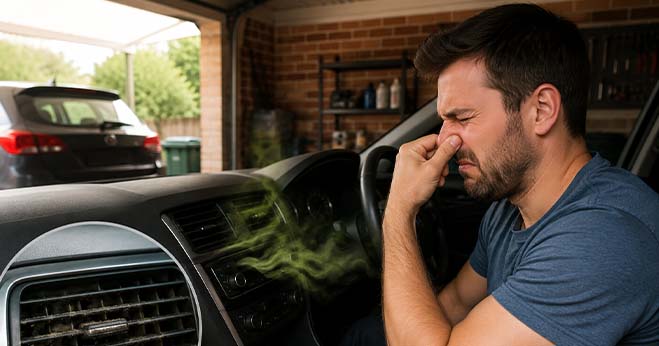
- Stale or damp odors of vents. The presence of low gas allows moisture to accumulate, nourishing bacteria.
- The windows become foggy or remain hazy. The humidity can not be drawn well into the system.
- On the evaporator, there is ice on the lines underneath the dash. The inadequate refrigerant would lead to freezing.
When you see two or more, do not lose time. Smells strike sooner in wet coastlines such as the one in Cairns. Check by running the AC on a hot day, when the cabin rises to above 25 °C in 5 minutes, the time is right.
For the full list of warning signs and what to do next, read our guide on how to know when your car needs an air conditioning regas before the heat gets worse.
What Affects Regas Timing in Australian Conditions?
Summary: Age, weather, and manners vary the frequency of your regas. Hot weather shortens the gap.
There are a number of variables that change the 1-2 year rule. The first one is vehicle age: the older the seals get, after 5-7 years, the more they become leaky. New models are more air-tight, and they retain gas 20-30% longer.
In Australia, the climate is significant. Fridge Tasmania winters lose refrigerant faster than the desert heat in Alice Springs. Salt in the air around the beaches decays fittings, which increases the risk of leakage.
Driving style matters too. The compressor is overworked by stop-go traffic in Adelaide, which is passing at a greater gas rate than uninterrupted M1 traffic. Powerful AC in summer – use it for daily hours in summer – reduces intervals by half a year.
Past care counts. Wear is retarded by frequent changes of the filter. Record your recent date of regas in the service log.
Key Benefits of Regular Regassing
Summary: Regassing helps make the ride comfortable, reduces fuel usage, and prevents breakdowns. It keeps the air fresh, too.
Keeping up with regas is rewarded even in straightforward ways. On 35 °C days, cool air will give a dose of comfort to the drivers, and fatigue will be minimized. In the absence of it, heat is distracting, with an increase in the risk of accidents.
It conserves gas; a low AC increases the consumption by 5-10 percent as the engine works hard. New gas allows the system to run naturally.
Fewer allergies and fewer bacteria mean better air quality. This maintains vents in dusty outback drives.
Regas Needs for Different Drivers
Summary: Novice drivers are concerned with the fundamentals; mature drivers are concerned with aging. City vs rural changes advice.
The advice of Regas changes with experience and habit. Amateurs in an entry-level car, such as a small SUV, are to check annually. Habits build; learn the signs early.
The more experienced drivers who have utes or vans carry heavier loads, and, therefore, you need to watch more compressor cycles. When towing in rural NSW, the heat accumulates quickly, and it must be checked every 9 months.
Peak time strain is experienced by urban commuters. The users of rural highways achieve more consistent periods at slower speeds.
Families in hot areas should keep it cool to ensure safety. Individual employees enjoy efficiency on the way to work.
Quick Ways to Make Your AC Last Longer
Summary: Run it weekly, shade park, and clean filters. These stretch regas gaps.
Extend the time between regas with easy steps. Turn on the AC for 10 minutes weekly, even off-season. These oils seal and stop cracks.
Park in shade or garages, direct sun heats parts, speeding leaks. Use sunshades on windshields.
Swap cabin filters every 12 months. Clogged ones block flow, stressing the system.
On hot days, recirculate air to lighten the load. Avoid max cold blasts; ease in.
Combine with belt and hose inspections during services. These habits add 6-12 months per cycle.
Handling Regas at Patel Auto Service Centre
Patel Auto Service Centre handles all AC needs with clear steps. Our general automotive work includes cooling checks alongside pink slips or tyre safety. We update you in real time during service. Fair pricing means no add-ons.
How often should you regas your car’s air conditioning? Bring it in yearly, we’ll confirm. Contact us to start.
FAQs
- How often should you regas your car’s air conditioning in Australia?
Every 1-2 years for most vehicles; yearly for cars over 7 years old or in hot/humid areas.
- What are the first signs your AC needs regassing?
Warm air from vents, slow cooling, hissing noises, musty smells, or iced lines, book a check when 2+ appear.
- Why does Australian heat make regassing more frequent?
High temperatures + humidity speed up refrigerant leaks and seal wear; coastal salt and outback dust add extra stress.
- How can I make my car AC last longer between regasses?
Run it 10 mins weekly, park in shade, change cabin filters yearly, and ease onto max cold, adds 6-12 months per cycle.
- What happens if I ignore a low refrigerant level?
The compressor overworks, fuel use rises 5-10%, and major repairs (often $1500+) can result, regular regas prevent this.








Leave A Comment